

How Noise Can Affect Electric Scooters
Electric scooters can fill the "last mile" of a commute, cutting down on waiting for public transportation or sat in your own car in traffic. They're also a fun way to get around town or do errands, without getting sweaty.
The scooters have big tires that provide cushioning and front or rear suspension for a more comfortable experience. These scooters have an upper limit on speed that is suitable for children who are younger or less coordinated children and are equipped with Safety Mode.
Speed up
Electric scooters have become an increasingly popular method of getting around the city because they are quick, eco-friendly and offer a range of top speeds. Some electric scooters can even be off-road or off-pavement if that's what you want. If you want an e-scooter to move around the city swiftly pick one with a higher speed rating.
Depending on the model, the fastest e-scooters can reach speeds of up 25 mph. The speed you travel at is contingent upon a variety of aspects, including your weight, riding style, and battery capacity. The weather and terrain affect the speed at which you can travel.
Most manufacturers will give a range of how far you can go with a single charge however, this is basing it on a typical rider of a certain weight traveling at a set pace on an unpaved surface. In fact, if you're heavier or faster you'll probably get less miles per charge.
Moreover, the efficiency of the electric scooter's motor may change with temperature. Higher temps can cause the motor to overheat, which can eventually slow down its speed. Additionally, the size of a scooter's tires can affect its speed. The larger tires will assist in maintaining a constant speed by providing better traction with the ground.
It's tempting, but always consider the risks of driving your electric scooter at a high speed. If you're determined to increase your scooter's speed it's important to buy a top-quality model equipped with advanced brakes and stability controls that can support safe riding at high speeds.
It's also important to abide by all state and local laws regarding scooter speeds prior to going out for a spin. Some states require a license to operate an e-scooter while some restrict the speed to 20 miles per hour. In any case, be sure to wear a helmet and protective equipment to ensure security.
Range
Electric scooters are an excellent method of reducing your carbon footprint. It is crucial to understand what affects your e-scooter’s range to ensure that you don't end up stuck mid-way through your journey. There are a variety of ways to boost the battery longevity of your electric scooter and get the most out of every charge.
To figure out your e-scooter's maximum distance on a full charge, start by figuring out how much power it can deliver in one hour. This information is typically displayed on the scooter's display or can be calculated using the formula below:
The speed of your scooter can also affect your range. A faster speed consumes more energy and drains your battery more quickly. A moderate speed will extend the range of your e-scooter.
Other factors that affect your e-scooter's mileage include the weight of the rider and riding conditions. The motor will be under more strain by heavier riders and will reduce the range. This is also the case for constant acceleration and deceleration, which requires more energy than continuous riding. Additionally, driving in bustling traffic and stopping frequently at light posts can affect your electric scooter's performance.
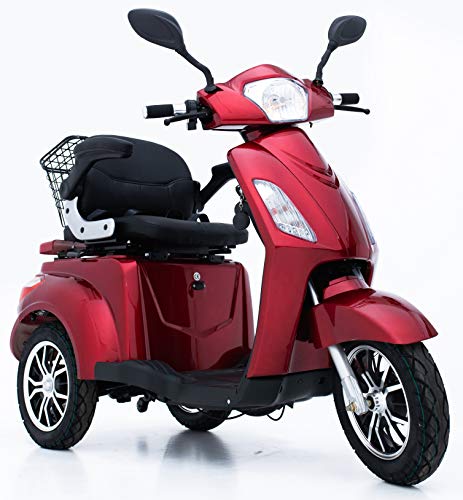
If you're looking to boost the mileage per gallon of your electric scooter, select an option with a high-efficiency engine and a large battery. These models have the highest fuel efficiency and the longest range.
It is also beneficial to read reviews from real-world users and product tests when looking for an electric scooter. Although statistics from the manufacturer are a good starting point, it's always best to exercise cautiously and choose one that has been tested in your riding conditions and environment. This can make it easier to avoid purchasing the wrong scooter, which will not meet your expectations and cause discontent. It's important to consider the features of each model before deciding on a scooter, as they can affect your mileage. Certain models have rapid and double charging options, which can reduce the time needed to charge your electric scooter.
Portability
Electric scooters are becoming increasingly popular and you'll see them everywhere. Info 're the perfect blend of style, convenience, and environmental sustainability which makes them a great choice for commuters who want to move quickly without a lot of hassle.
When you're looking for an electric scooter, think about its weight, size, range, and power. The weight of the scooter will impact the ease with which it can maneuver and transport, and its size will determine if you can fit it in your trunk or take it on public transportation. The most commonly used type of battery is lithium-ion. The scooter's autonomy will be affected by capacity of the battery. Certain models can travel up to 100km on a single charge.
Another factor to consider when selecting an electric scooter is the braking system. Some models feature mechanical brakes that are based on mechanical mechanisms, whereas others use electronic brakes. Electronic brake systems provide more stable brake performance and don't require any maintenance. Some models also have regenerative braking capabilities that recharge the battery while braking.
Once you've considered these aspects The next step is to pick a model that suits your needs. Check out our collection of top-rated electric scooters and choose the one that is best for you.
Compared to conventional vehicles, electric scooters produce less pollutants and can improve air quality in urban areas. Electric scooters are quiet, which allows you to move through busy streets without disturbing other users. It is crucial to remember to comply with all laws governing the use of electric Scooters on the road and in other public spaces. Motorized scooters are usually restricted to bike lanes. They are not permitted to be used on pedestrian paths. Additionally, you must wear a helmet and follow the other traffic rules while riding an electric scooter. Talk to a professional if are unsure of the laws in your area.
Noise
The sound produced by electric scooters can vary widely depending on a number of factors. This includes the type of motor, tires, and transmission system. The braking and acceleration system can also create noise. In these instances, it is crucial that the problem be identified and dealt with promptly to ensure safety and efficiency.
If you hear a squeak as you accelerate it could be a sign of a damaged or loose component. You can determine the culprit by conducting a hands-on inspection. Be best portable electric mobility scooter of the squeak's strength and frequency during different actions, like turning or stopping. This will help you determine particular components that require repair or replacement.
Another issue with electric scooters is that they emit unusual sounds when they accelerate. This is due to the friction between the tires and the road surface. These sounds can be disruptive to both drivers and pedestrians. There are many methods to lessen the noise. You can replace the tires with one that produces less noise in operation. You can also opt for an electric scooter with rubber wheels to decrease friction.
Electric scooters reduce noise and traffic congestion. Electric scooters have quieter motors that do not require gas and emit fewer emissions. They are also much easier and more maneuverable in tight spaces. This makes them a great mode of transport in urban areas.
Despite their lower noise output, electric scooters are still thought to be a significant source of pollution for traffic in certain cities. To combat this, manufacturers are experimenting with designs that will make electric scooters even quieter.
In a recent study researchers discovered electric scooters that were traveling at 30 km/h, without an additional alert sound did in fact not provide sufficient auditory warning for pedestrians to react in time to avoid being struck by a vehicle. The results revealed that 29% of pedestrians did not detect a low level of 50 dB, and 77% of pedestrians missed detection at a level of 60 dB.